Rosewood, part of the broader Muckanippie mineral sands project, was found in late 2024 by the same team behind the discovery of the Prominent Hill mine, including PTR chairman Derek Carter and CEO Peter Reid.
In late June, PTR reported an initial resource for Rosewood of 463 million tonnes at 8.8% heavy minerals (HM) for 40.6Mt of contained HM, using a 3% HM cut-off.
The estimate includes the higher-grade Rosewood East deposit with a resource of 294Mt at 9.7% HM for 28.5Mt of HM.
At an 8% HM cut-off grade, the total resource stands at 208Mt at 13.5% HM.
“Not only is it really big, it’s also as high-grade as I’ve ever seen for a heavy mineral sands project,” PTR managing director Rob Sennitt said.
Sennitt would know, as the former managing director of Mineral Deposits, which mined a deposit in Senegal with a resource grade of 1.4% HM.
The Rosewood resource benefits from its coarse grain size and rich mineralogy, comprising 93% valuable HM, dominated by high-quality leucoxene.
“There’s just nothing that approaches this thing in terms of grade, which is fantastic, obviously, because it just provides all these advantages,” Sennitt said.
“Now we don’t have to chase every last grain, if you like, in order to get recoveries as high as possible to get the most efficient processing operation.
“For us, because we’ve got such a high grade, I think that will give us a lot of flexibility with respect to capital and operating costs in terms of how hard you push this thing at the end of the day.”
Positive study
Last month, PTR reported the positive outcome of a preliminary mine optimisation and scheduling study by AMC Consultants.
AMC evaluated four processing throughput cases, with each scenario demonstrating the potential for mine sequence design to provide access to Rosewood’s higher-grade material of up to 17% HM early in the mine life to maximise initial cashflows.
Given the Rosewood deposit is a single, large, coherent and shallow deposit, it is expected to be amenable to conventional open pit mining.
Initial metallurgical test work by Mineral Technologies showed the potential to produce a high-quality titanium product with acceptable recoveries through wet concentration alone, without the additional dry separation stage previously contemplated.
“We’ve got this unbelievable particle size distribution, which gives us quite a coarse product and gives us some significant advantages, both in processing and in discussions with customers,” Sennitt said.
Acknowledging that there are different definitions of “world-class”, Sennitt said there is one important metric yet to measure for the Rosewood project.
“To me, it’s big, high-grade … and we’re now going through the studies to see where it sits from a cost perspective,” he said.
“My gut feel is that processing costs should be competitive as well.”
Rosewood also has logistical advantages.
“We sit right on the Darwin to Adelaide railway line, so I think we’re 30km from a siding that already exists,” Sennitt said.
“We can take the material up to Darwin if we wanted, but in all likelihood we’ll bring it down to Whyalla.
“Obviously, we haven’t made any of those decisions at this point in time, but that would be a very easy thing for us to do.”
Further work underway
PTR is working on a scoping study for Rosewood and has already sent product samples to potential customers.
“We’ll produce a leucoxene that sits around 66-67% TiO2 – not a lot of impurities in it, and that’s why we’re out now talking to customers to establish where it sits in the market, and what the level of demand is. That will also then help us drive the study work,” Sennitt said.
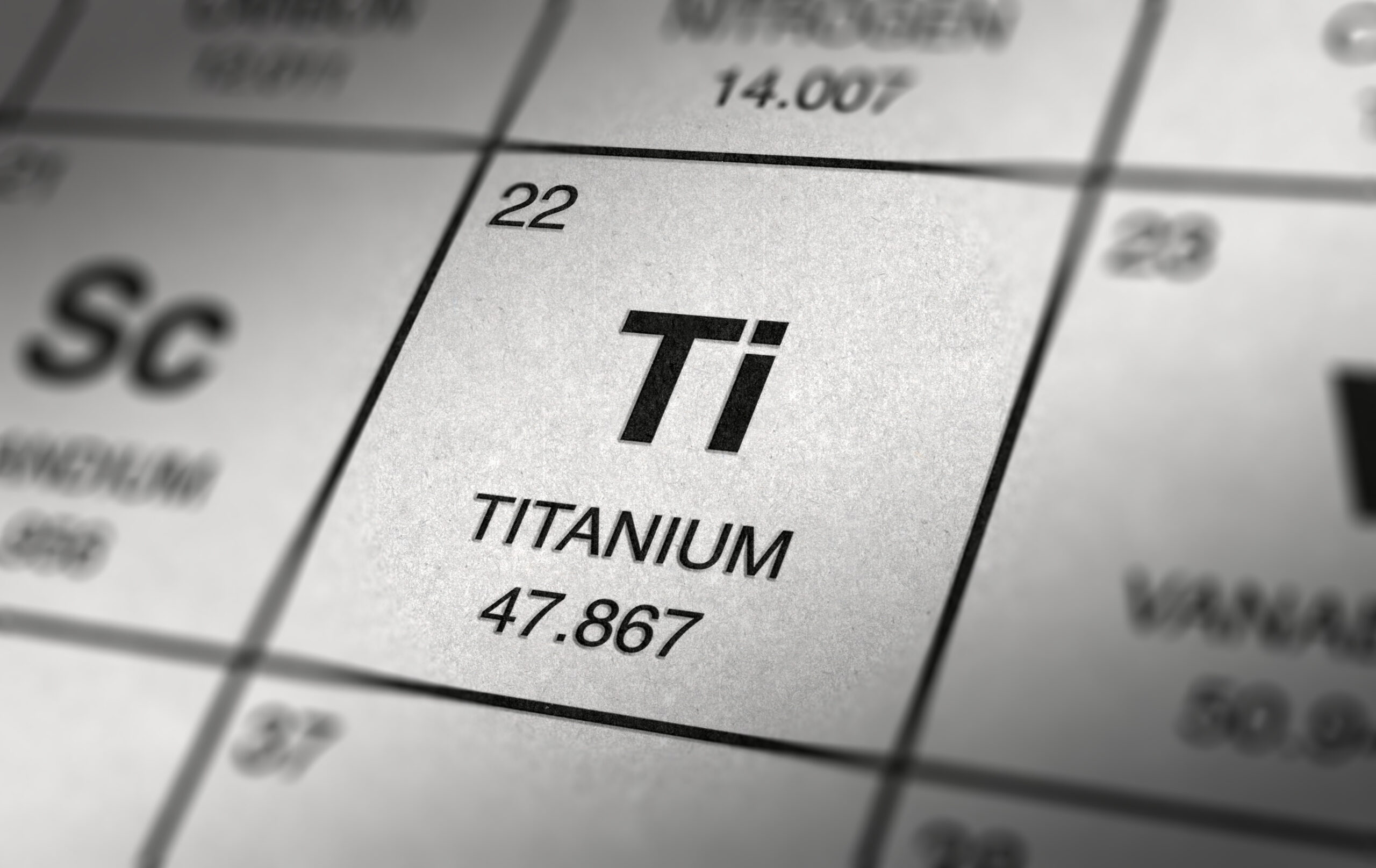
Titanium is largely used in paint pigment, though PTR’s product could potentially go into a slag or a synthetic rutile.
Former Base Resources executive director Colin Bwye recently joined the PTR board.
“We’ve got a lot of good people on board,” Sennitt said.
“The next step for us will be finalising all of those scoping studies, moving then into PFS… so things are moving pretty quickly.
“If we can show that this project is profitable at all stages of the cycle, I think that’s a major tick.”
Given a lot of titanium comes out of Africa, Rosewood’s location in a tier one jurisdiction like South Australia is another tick for potential customers.
“We could be a really nice low-risk source of feedstocks for those guys, so that’s what we’re out marketing at the moment,” Sennitt said.
“It’ll be really interesting to see how all of the testing goes in in the various facilities around the world and what role we might be able to play.”