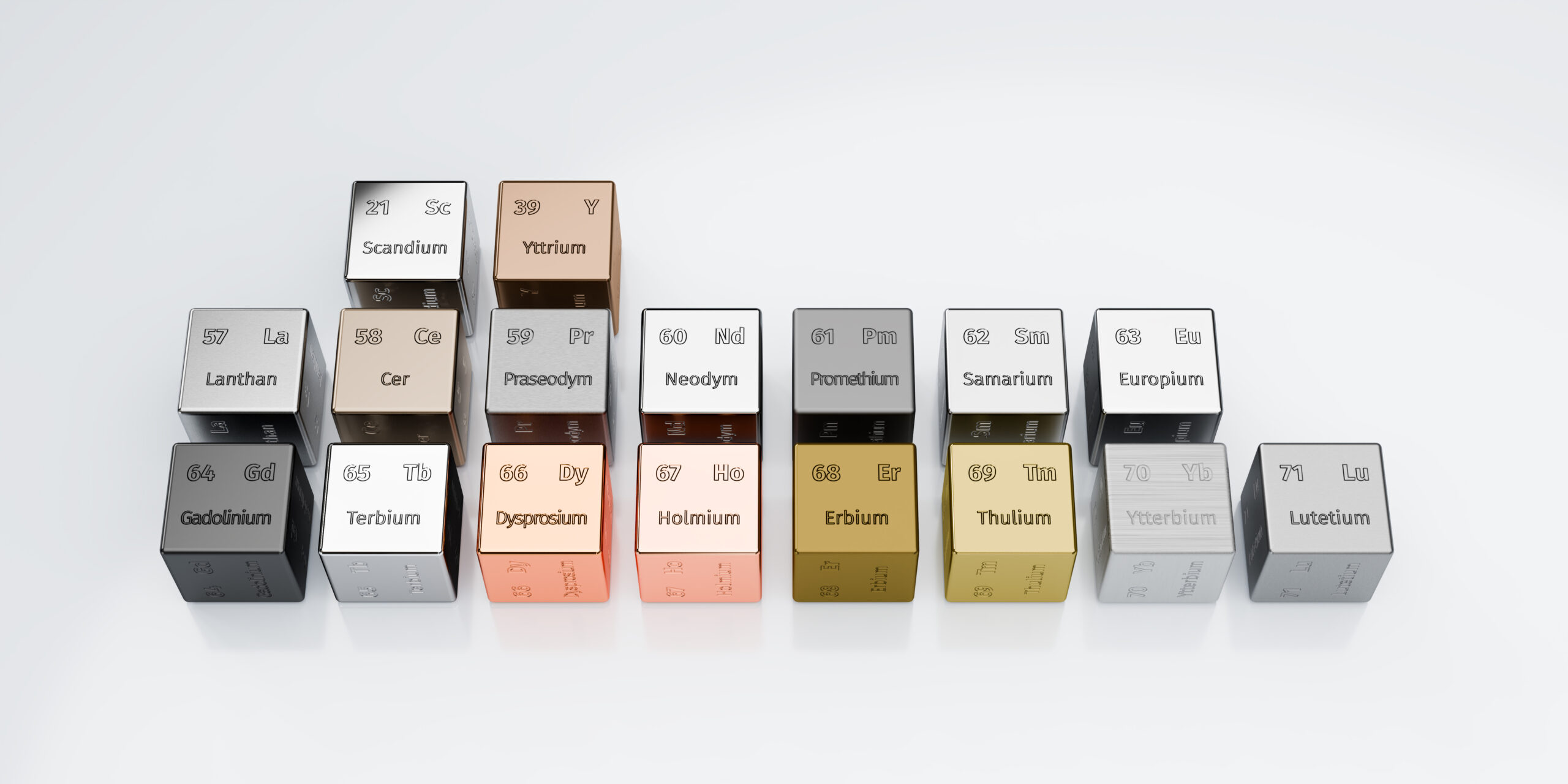
Earlier this month, the US Department of Defence (DoD) agreed to provide Sunrise Energy Metals with a US$400 million loan to help develop its Syerston scandium project near Dubbo, securing priority access to future production.
The deal is part of an increasingly aggressive push by Washington to loosen China’s grip on critical minerals supply chains. And it puts the spotlight squarely on the potential strategic value sitting within Australia’s next generation of critical mineral developments.
One company that may have flown somewhat under the radar in that conversation – until now at least – is the Norm Seckold-chaired NSW tin-tungsten-silver developer Sky Metals (ASX: SKY).
Sky’s 100%-owned Tallebung project near Condobolin in central-western NSW hosts a large and growing resource of tin, tungsten and silver – three metals with increasingly important roles across electronics, semi-conductors, renewable energy and defence.
And unlike many strategic mineral opportunities currently being touted in the junior ASX mining sector, Tallebung already comes with some compelling economic credentials.
The August 2026 pre-feasibility study outlined a straightforward 3Mtpa single open-pit development requiring pre-production capital of just A$138.8 million.
The initial 7.3-year mine plan uses only 66% of the current 32.7Mt resource and delivers a pre-tax NPV8 of A$438 million, annual EBITDA of A$116 million and a 69% IRR. At spot commodity prices, the NPV rises to approximately A$1 billion and annual EBITDA to A$221 million.
Against Sky’s recent market capitalisation of around A$213 million, the numbers provide an interesting valuation backdrop.
Managing director Oliver Davies believes the well-received PFS has fundamentally changed the Sky Metals investment proposition.
“What the PFS shows is that Tallebung isn’t simply a large strategic metals resource – it has the potential to be a highly profitable, relatively low-capital development,” Davies said.
“The delivery of the PFS in August was a big inflection point for Sky because it was the first time we put economic and financial parameters around the project, even though we had been drilling and exploring there for quite some time.
“We have three high-value commodities, a simple open-pit operation, exceptionally effective ore sorting and a modest downstream processing requirement.
“That combination gives us a development proposition which we think is quite unusual in the critical minerals space.”
Tallebung’s metallurgy is central to the story.
Its coarse mineralisation responds particularly well to X-ray transmission ore sorting, with bulk testwork delivering grade upgrades of more than 10 times along with high recoveries of tin, tungsten and silver.
This allows the bulk of mined material to be rejected before downstream processing, meaning a 3Mtpa mining operation requires a plant capable of treating only about 500,000tpa.
The resulting flowsheet relies on ore sorting and simple, conventional gravity concentration, reducing capital intensity, power and water requirements with no reliance on expensive reagents
Sky has long touted the benefits of ore sorting to the Tallebung investment proposition, but just how significant these benefits were in terms of low capex and big margins only became clear in the recent PFS.
The market has also finally begun to appreciate the multi-commodity nature of the Tallebung deposit, with tungsten and silver also making an important contribution to the project’s economics.
Tin represents around 61% of forecast life-of-mine revenue, tungsten 29% and silver 10%, with co-product credits helping reduce estimated all-in sustaining costs to around US$5,600/t of tin produced.
“People naturally look at Tallebung as a tin project, but the PFS really brought the value of the tungsten and silver into focus,” Davies said.
“Those co-products leverage the potential revenue and effectively position Tallebung as an extremely low-cost source of tin at a time when secure supplies of all three metals are becoming increasingly important.”
There may also be considerably more to come.
The July resource upgrade lifted the Tallebung MRE to 32.7Mt at 0.16% tin equivalent, containing 36,800t tin, 1.14 million mtu tungsten trioxide and 9.94Moz silver. This represented increases of 58% in contained tin and 163% in contained tungsten, while establishing a maiden silver resource.
Subsequent drilling has already intersected further shallow, high-grade mineralisation outside that resource, including tungsten grades of up to 4.32% and silver grades of up to 218g/t.
With the resource open in all directions and only two-thirds currently captured by the PFS mine plan, extending the initial mine life represents an obvious opportunity.
“We don’t see 7.3 years as defining the ultimate scale or mine life of Tallebung,” Davies said. “We are continuing to drill outside the resource and we see a clear opportunity to grow the inventory and bring additional tonnes into future mine plans.”
At the same time, Sky is progressing a definitive feasibility study and environmental impact statement, having already completed more than three years of environmental work. The company is targeting first production around mid-2028.
That timeline places Tallebung squarely in the window in which Western governments are looking for new sources of strategic minerals.
Sunrise provides a striking example of what can happen when strategic relevance, development readiness and government support converge. Its shares have risen around 1,200% over the past year and the company was recently valued at about A$2.5 billion.
The comparison demonstrates the premium increasingly being attached to advanced Australian projects capable of supplying metals the West needs.
“The strategic backdrop has changed enormously,” Davies said. “Governments and customers are increasingly focused not just on where critical minerals come from, but whether those supply chains are secure.”
“Tallebung is in New South Wales, it has a clear development pathway, relatively modest capital requirements and exposure to three strategically important metals.
“Our job now is to keep de-risking it and demonstrate why it is uniquely positioned to become Australia’s next major tin-tungsten-silver producer, while at the same time keeping the conversations going with big strategic partners who may wish to speed Tallebung into production.”